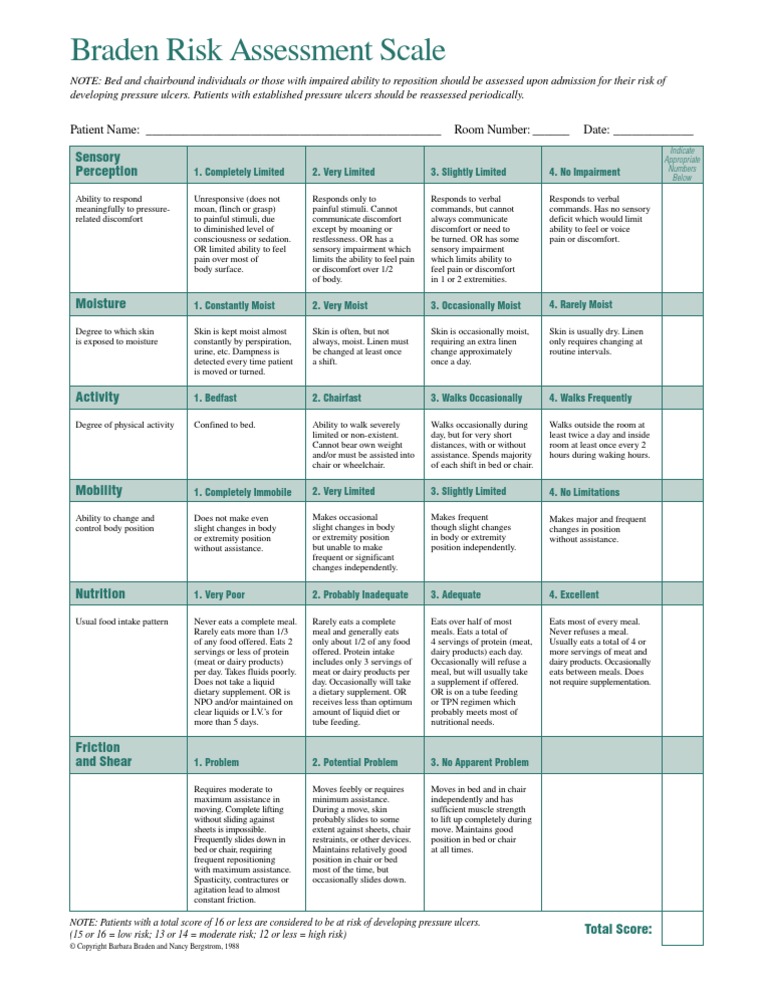
Braden Scale Chart
Braden Scale Chart - Risk factors are rated on a scale from 1 to 4, with 1 being “completely limited” and 4 being “no impairment.” the. An interrater reliability study of the braden scale in two nursing homes. A new look at the braden scale for pressure ulcer risk among older adults in home health care. journal of bsn honors research. Web the braden scale for predicting pressure sore risk. nurs res. See figure 10.21 [1] for an image of a braden scale. Developed 1984 by braden and bergstrom six elements that contribute to either higher intensity and duration of pressure or lower tissue tolerance to pressure therefore increasing the risk of pressure ulcer development. Unresponsive (does not moan flinch or grasp) to painful stimuli, due to diminished level of consciousness or sedation or When using the braden scale, start with the first category and review each description listed across the row for each of the ratings from 1 to 4, and choose the one that best describes. Web figure 10.21 braden scale how to score the braden scale. Total score 9 high risk: A new look at the braden scale for pressure ulcer risk among older adults in home health care. journal of bsn honors research. Completely limited unresponsive (does not moan, flinch, or grasp) to painful. Web the braden scale for predicting pressure sore risk. nurs res. Web the braden scale g u i d e l i n e s the braden scale is a scale that measures the risk of developing pressure ulcers. Web figure 10.21 braden scale how to score the braden scale. Total score 9 high risk: Each risk factor on the braden scale is rated from 1 to 4 based on the patient’s assessment findings. Ability to respond meaningfully to pressure related discomfort. Web braden scale for predicting pressure sore risk patient’s name: When using the braden scale, start with the first category and review each description listed across the row for each of the ratings from 1 to 4, and choose the one that best describes. Each risk factor on the braden scale is rated from 1 to 4 based on the patient’s assessment findings. The scale consists of six subscales that reflect determinants of pressure (sensory perception, activity and mobility) and factors influencing tissue tolerance (moisture, nutrition and friction and shear). Completely limited unresponsive (does not moan, flinch, or grasp) to painful. Ability to respond. When using the braden scale, start with the first category and review each description listed across the row for each of the ratings from 1 to 4, and choose the one that best describes. The scale consists of six subscales that reflect determinants of pressure (sensory perception, activity and mobility) and factors influencing tissue tolerance (moisture, nutrition and friction and. Web figure 10.21 braden scale how to score the braden scale. Developed 1984 by braden and bergstrom six elements that contribute to either higher intensity and duration of pressure or lower tissue tolerance to pressure therefore increasing the risk of pressure ulcer development. A new look at the braden scale for pressure ulcer risk among older adults in home health. See figure 10.21 [1] for an image of a braden scale. Total score 9 high risk: An interrater reliability study of the braden scale in two nursing homes. Web the braden scale for predicting pressure sore risk. nurs res. Completely limited unresponsive (does not moan, flinch, or grasp) to painful. When using the braden scale, start with the first category and review each description listed across the row for each of the ratings from 1 to 4, and choose the one that best describes. See figure 10.21 [1] for an image of a braden scale. Total score 9 high risk: Each risk factor on the braden scale is rated from. Web braden scale for predicting pressure sore risk patient’s name: Ability to respond meaningfully to pressure related discomfort. Each risk factor on the braden scale is rated from 1 to 4 based on the patient’s assessment findings. Completely limited unresponsive (does not moan, flinch, or grasp) to painful. Risk factors are rated on a scale from 1 to 4, with. Web figure 10.21 braden scale how to score the braden scale. Unresponsive (does not moan flinch or grasp) to painful stimuli, due to diminished level of consciousness or sedation or Risk factors are rated on a scale from 1 to 4, with 1 being “completely limited” and 4 being “no impairment.” the. The scale consists of six subscales that reflect. Total score 9 high risk: See figure 10.21 [1] for an image of a braden scale. Web the braden scale g u i d e l i n e s the braden scale is a scale that measures the risk of developing pressure ulcers. Completely limited unresponsive (does not moan, flinch, or grasp) to painful. The scale consists of six. See figure 10.21 [1] for an image of a braden scale. Web the braden scale for predicting pressure sore risk. nurs res. A new look at the braden scale for pressure ulcer risk among older adults in home health care. journal of bsn honors research. Unresponsive (does not moan flinch or grasp) to painful stimuli, due to diminished level of. Ability to respond meaningfully to pressure related discomfort. Developed 1984 by braden and bergstrom six elements that contribute to either higher intensity and duration of pressure or lower tissue tolerance to pressure therefore increasing the risk of pressure ulcer development. Web figure 10.21 braden scale how to score the braden scale. Each risk factor on the braden scale is rated. Ability to respond meaningfully to pressure related discomfort. Web the braden scale for predicting pressure sore risk. nurs res. An interrater reliability study of the braden scale in two nursing homes. When using the braden scale, start with the first category and review each description listed across the row for each of the ratings from 1 to 4, and choose the one that best describes. Web braden scale for predicting pressure sore risk patient’s name: The scale consists of six subscales that reflect determinants of pressure (sensory perception, activity and mobility) and factors influencing tissue tolerance (moisture, nutrition and friction and shear). Unresponsive (does not moan flinch or grasp) to painful stimuli, due to diminished level of consciousness or sedation or Developed 1984 by braden and bergstrom six elements that contribute to either higher intensity and duration of pressure or lower tissue tolerance to pressure therefore increasing the risk of pressure ulcer development. Risk factors are rated on a scale from 1 to 4, with 1 being “completely limited” and 4 being “no impairment.” the. Web figure 10.21 braden scale how to score the braden scale. Total score 9 high risk: A new look at the braden scale for pressure ulcer risk among older adults in home health care. journal of bsn honors research.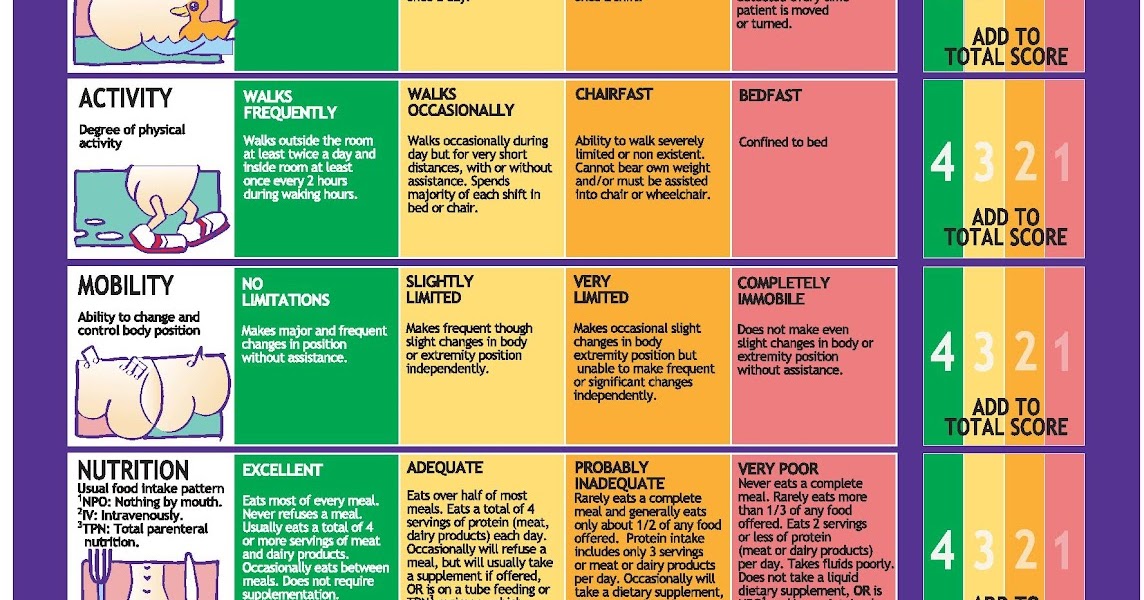
Printable Braden Scale Printable Blank World
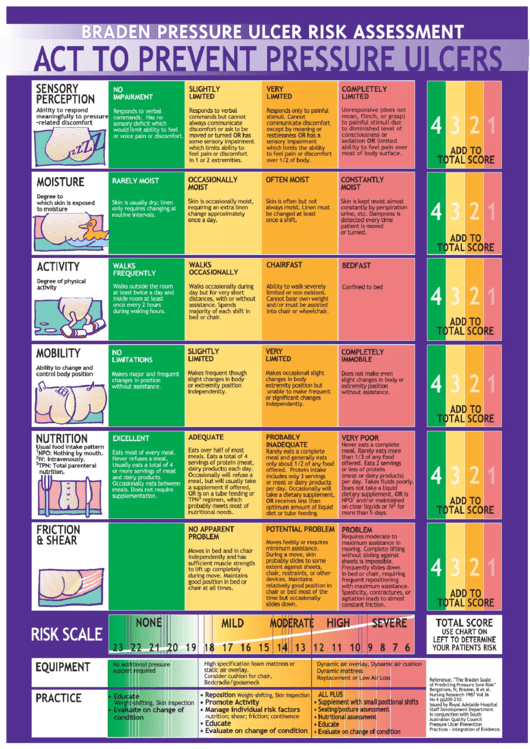
Braden Pressure Ulcer Risk Assessment printable pdf download
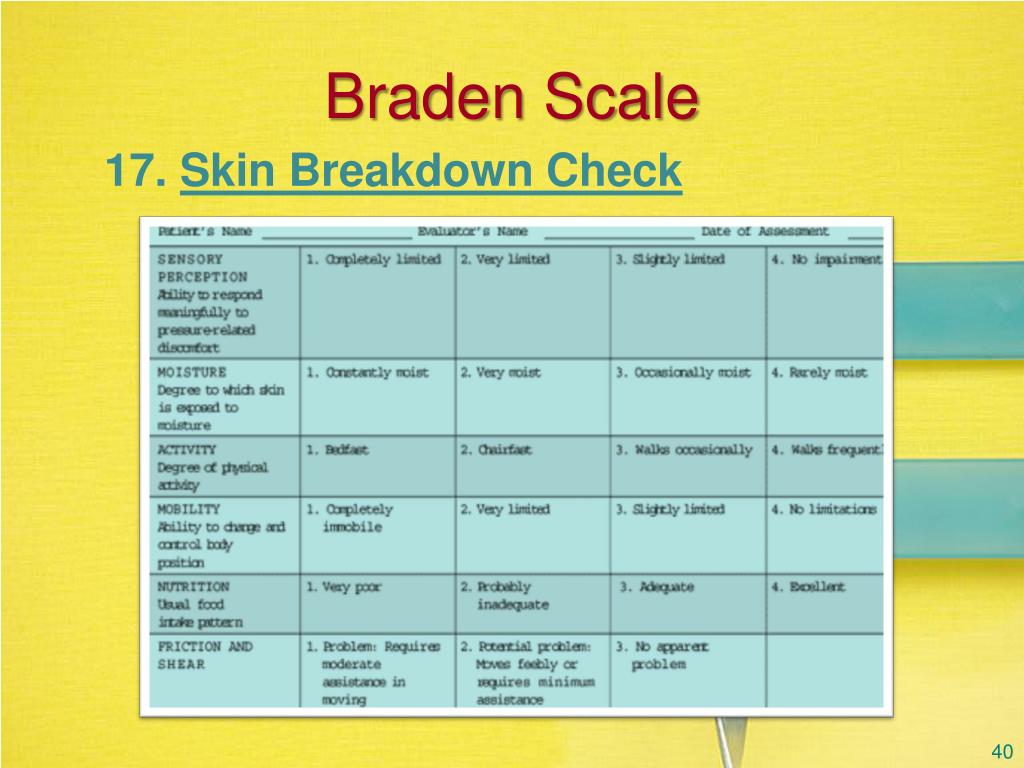
Braden Skin Scale
Braden Scale Eating Pain
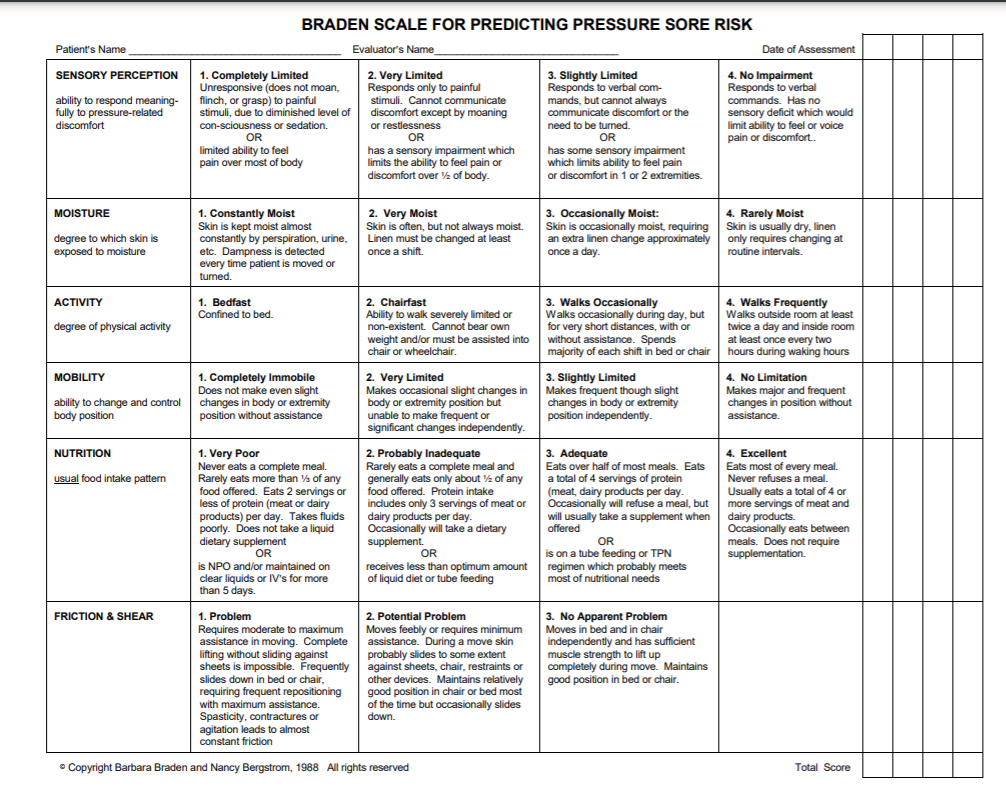
10.5 Braden Scale Nursing Fundamentals
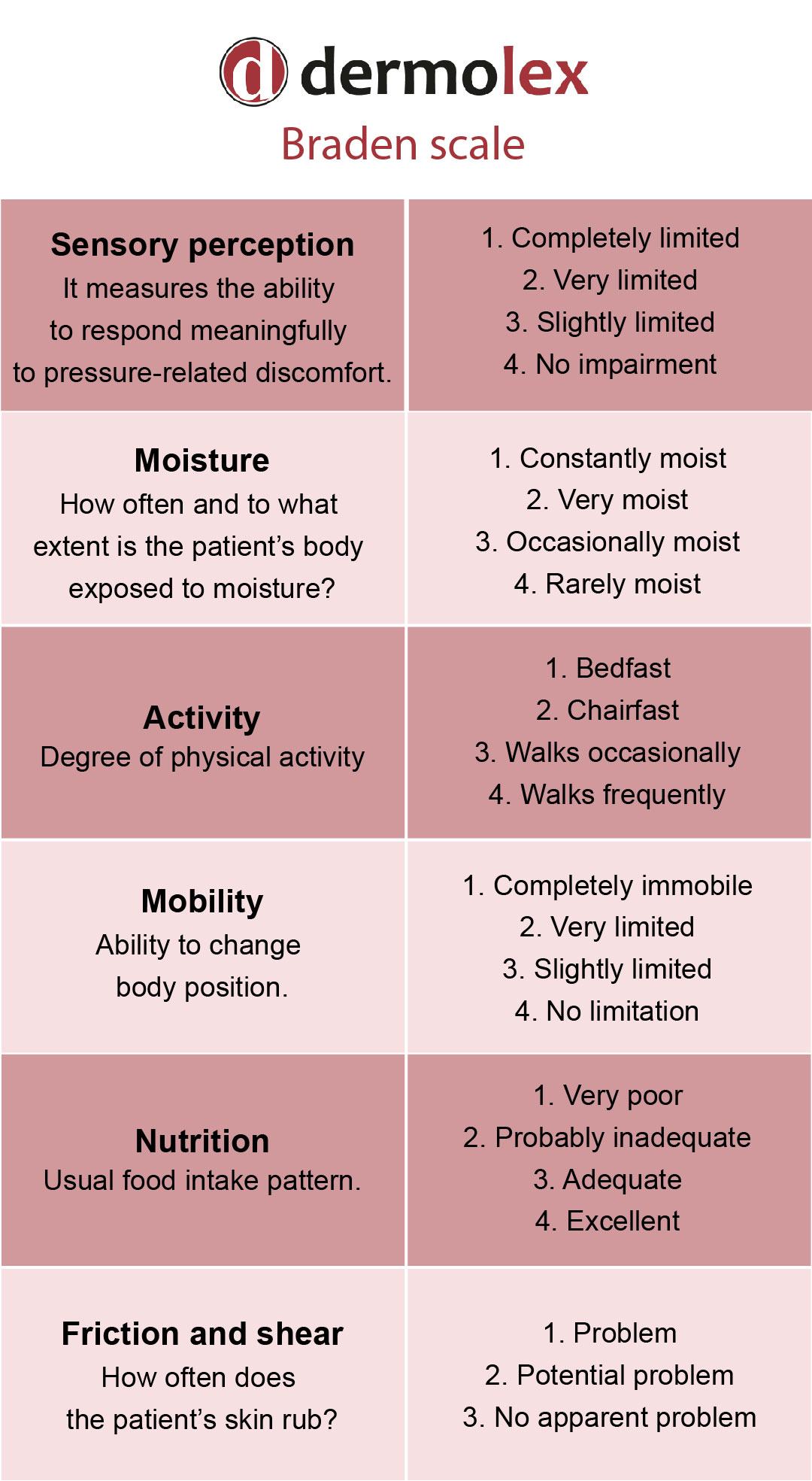
Braden Scale for Predicting Decubitus Risk Dermolex
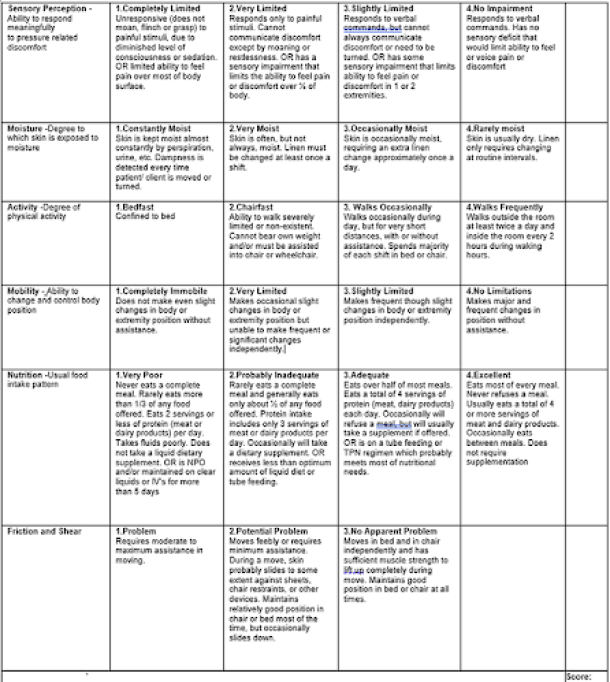
bradenscalepdfpreview EHOB
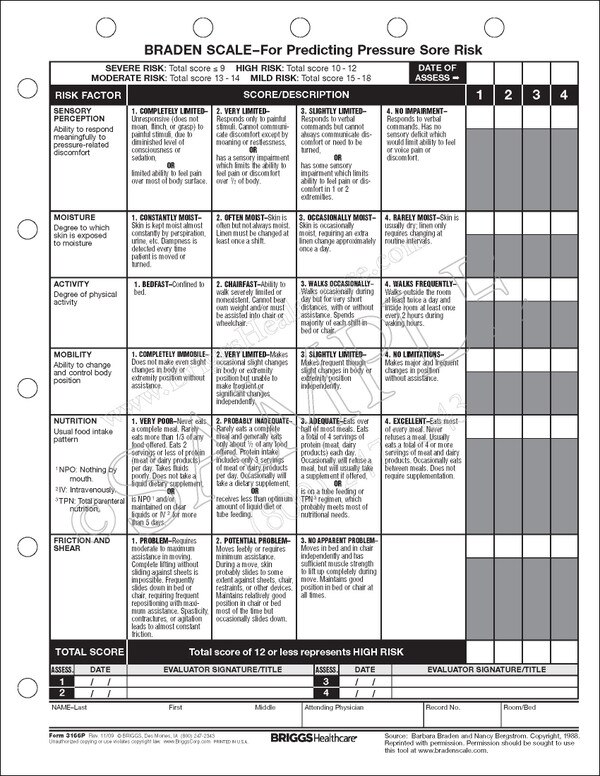
Braden Scale for Predicting Pressure Sore Risk
Braden Scale Eating Pain
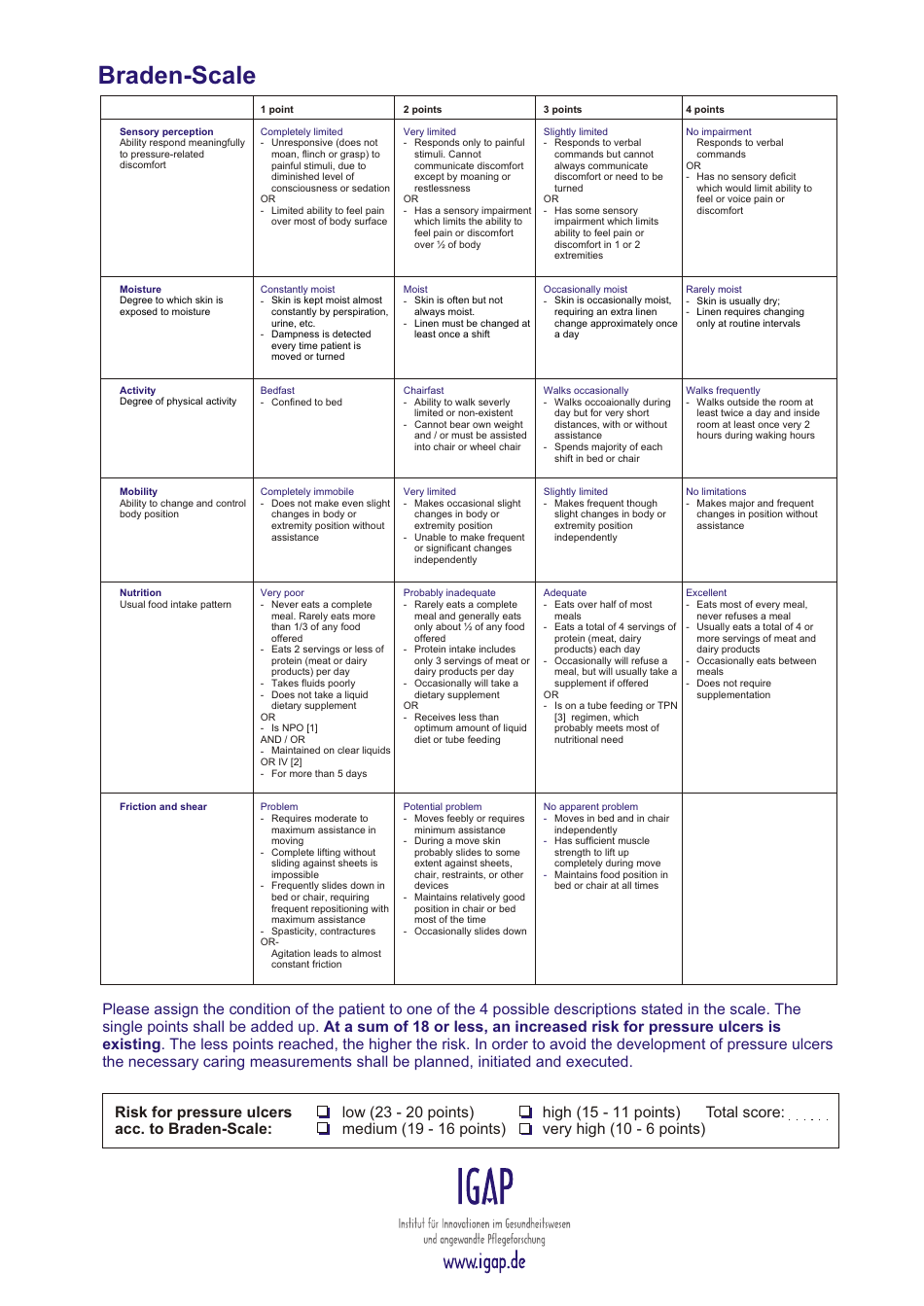
Braden scale assessment form. The Braden Scale. 20221025
Completely Limited Unresponsive (Does Not Moan, Flinch, Or Grasp) To Painful.
See Figure 10.21 [1] For An Image Of A Braden Scale.
Each Risk Factor On The Braden Scale Is Rated From 1 To 4 Based On The Patient’s Assessment Findings.
Web The Braden Scale G U I D E L I N E S The Braden Scale Is A Scale That Measures The Risk Of Developing Pressure Ulcers.
Related Post: